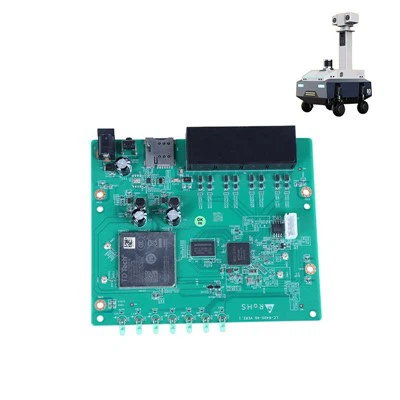
As a kitchen controller supplier, one of the most common questions we receive is whether kitchen controllers can be customized. The answer is yes. In fact, customization is not only possible but often the best solution for businesses with specific operational needs.
This article outlines the key dimensions of kitchen controller customization-covering hardware, software, user interface, and physical design-and explains how tailored control solutions can improve equipment performance and operational efficiency.
What Is a Kitchen Controller?
A kitchen controller serves as the central control unit for commercial kitchen equipment such as leftover food processors, vegetable cutters, and cooking machines. It manages core functions including temperature regulation, motor speed, timing, and safety interlocks.
For businesses that rely on specialized food processing equipment, the controller directly impacts consistency, throughput, and ease of operation.
Why Customize a Kitchen Controller?
Standard off-the-shelf controllers may not fully address the specific requirements of different kitchen setups. Common reasons for customization include:
Accommodating unique equipment configurations with specific sensor or actuator requirements
Supporting specialized food processing tasks that require distinct operating modes
Improving user experience for operators with varying technical backgrounds
Matching the physical integration and aesthetic requirements of existing equipment lines
Below are the primary areas where customization can be applied.
1. Hardware Customization: Ports, Interfaces, and Integration
Hardware customization typically begins with input/output (I/O) configuration. Complex equipment-such as a leftover food processing machine with multiple sensors, motors, and safety switches-may require a controller with expanded I/O capacity.
For example, our Leftover Food Machine Controller PCBA supports custom port configurations to align with specific machine architectures. This ensures that the controller can handle all connected components without requiring external adapters or workarounds.
Additional hardware customization options include:
Selection of connector types for compatibility with existing wiring harnesses
Adjustments to board size and mounting hole locations for physical integration
Choice of enclosure materials and ingress protection (IP) ratings for demanding kitchen environments
2. Software Customization: Algorithms, Modes, and Control Logic
Software customization allows the controller to execute operation-specific tasks with precision.
For a vegetable cutter, different cutting outcomes-such as fine slicing versus coarse chopping-require distinct motor control algorithms and timing sequences. Our Vegetable Cutter Controller PCBA can be programmed with multiple operating modes, allowing operators to switch between tasks with a single button press.
For cooking machines, software customization supports:
Multi-stage cooking profiles (e.g., sear then simmer)
Temperature ramping and hold cycles for slow cooking or proofing
High-heat, short-duration modes for stir-frying or flash heating
All software parameters-including timers, speed curves, and temperature thresholds-can be configured to match specific recipes or production workflows.
3. User Interface Customization: Displays, Controls, and Usability
A well-designed user interface reduces operator error and training time. Customization options include:
Display layout: showing parameters such as temperature, time, and machine status in a clear, icon-based format
Language localization: displaying text in the preferred language of the end user
Control input: selecting between membrane keypads, touchscreens, or physical buttons based on the operating environment (e.g., gloved-hand operation)
Indicator design: using color-coded LEDs or audible alerts for critical states such as heating, cycle complete, or fault conditions
For example, instead of displaying technical codes, a customized interface may show simple status messages such as "Heating," "Chopping," or "Cycle Complete," improving usability for kitchen staff.
4. Physical Design Customization: Form Factor and Aesthetics
Physical integration is often overlooked but can significantly impact equipment assembly and brand consistency. Customization options include:
Enclosure size and shape to fit within existing equipment housings
Mounting configurations (e.g., panel-mount, surface-mount, or DIN-rail)
Color matching to align with equipment branding or kitchen design standards
A controller that integrates seamlessly into the equipment's physical design not only improves assembly efficiency but also presents a more professional appearance to end users.
Our Customization Process
For customers considering a customized kitchen controller, we follow a structured process to ensure alignment with technical and operational requirements:
1 Requirement review: discussion of equipment type, operating environment, and desired functions
2 Hardware and software specification: definition of I/O, control logic, and user interface
3 Prototype development: sample units for testing and validation
4 Iteration and approval: adjustments based on testing feedback
5 Production and support: volume manufacturing with ongoing technical support
Customization typically requires minimum order quantities (MOQs) and lead times that vary by project complexity. We work with customers to define these parameters early in the process.
Is Customization Cost-Effective?
While customized controllers may involve higher upfront engineering costs compared to standard products, they often deliver long-term value through:
Improved equipment performance tailored to specific applications
Reduced operator errors and training time
Lower total cost of ownership due to better integration and reliability
For businesses scaling production or standardizing equipment lines, customized controllers can also simplify inventory management and maintenance.
Get in Touch
If your kitchen equipment requires a control solution tailored to your specific needs, we invite you to contact us for a consultation. Whether you operate a small kitchen or a large-scale food processing facility, we can help you define and deliver the right controller for your application.
For more information on our customizable controller solutions-including the Leftover Food Machine Controller PCBA, Vegetable Cutter Controller PCBA, and Cooking Machine Controller PCBA-please reach out to discuss your requirements.